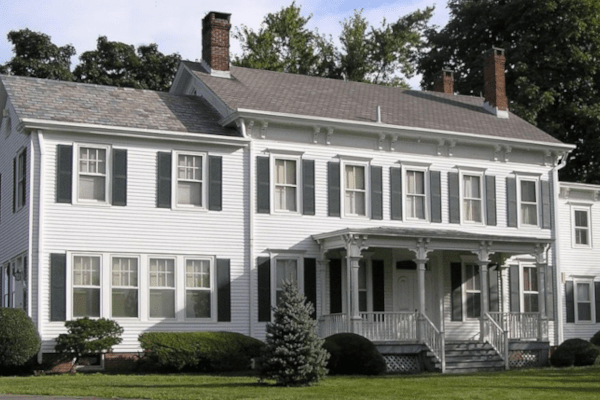
There are so many beautiful things to see in the Wicoff house. Today we must mention the fireplaces.
Here is the first one:
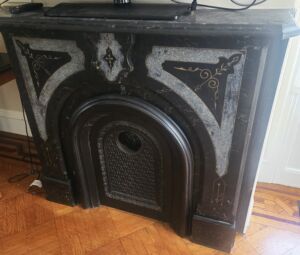
This stone fireplace is in the south parlor on the east wall. It contains an incised pattern typical of late 19th Century designs.
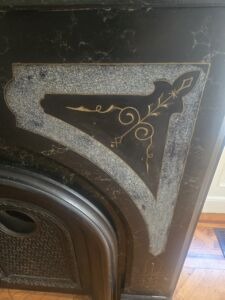
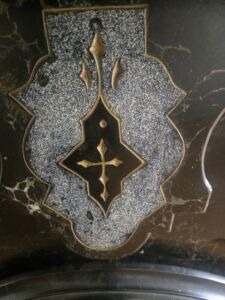
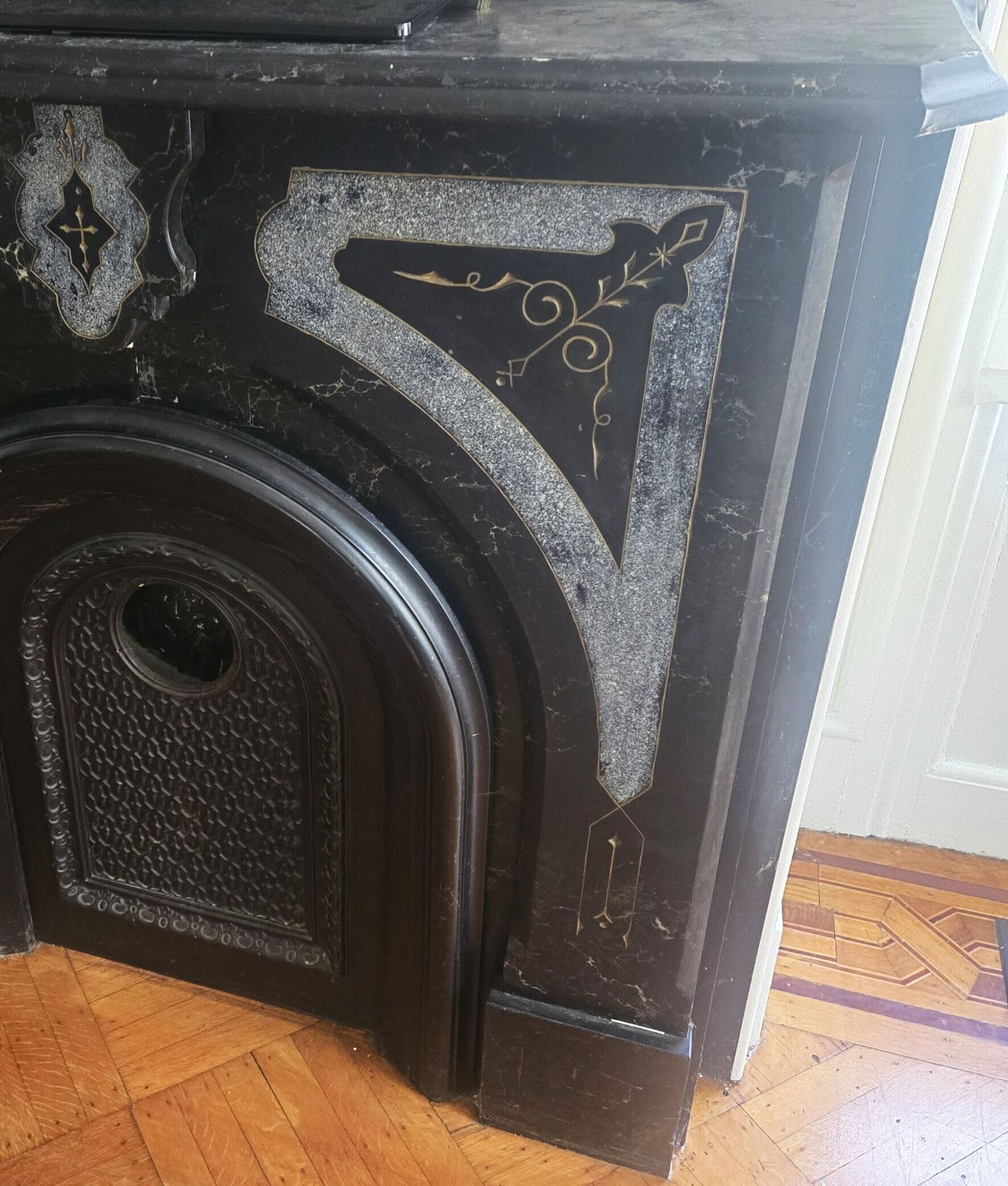
These close ups show that gold paint was added to the incised designs! This is exquisite! This detail also shows that the fireplace was faux painted to look like granite.
The living room west of the stair hall has this beauty on the west wall, which was installed Circa 1929.
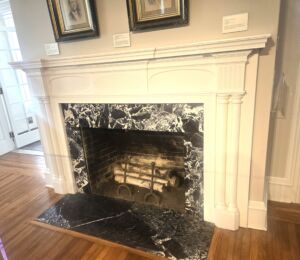
Notice the detailed carving on the Federal mantel, and the incredible black and white marble!
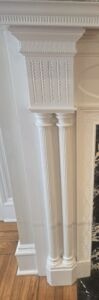
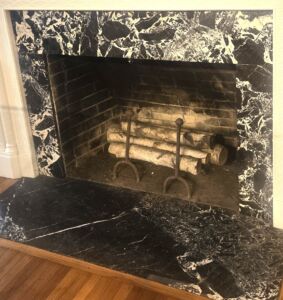
And a third fireplace – The North parlor fireplace is much simpler and painted white to match the trim.
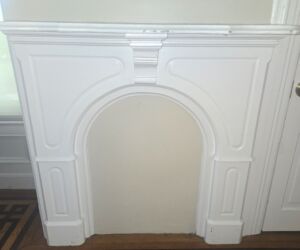
Even though this is a simple design, it is beautiful. Two corbels support the mantle.
A home with three fireplaces in the late 19th Century is a sign of wealth. Most families had only one. In this time period (The Victorian Period), there was a transition of the fireplace from the primary heat source of the home to a symbol of wealth, status and esthetic taste. Those of this period incorporated materials such as marble, cast iron and tiles. Elaborate mantlepieces and decorative elements were an opportunity for artistic expression. Fireplaces of this period were characterized by straight lines, geometric patterns and dark colors. They were not an extravagant display of money and power, but a statement of elegance. Fireplaces with all of their accoutrements were created to inspire awe in the viewer. They were the social center of the home. Gathering around a fireplace for warmth was conducive to socializing and represented ideals of home life. The fireplaces in the Wicoff house were innovative. There are no fireplaces in the second-floor rooms, however the flues from the fireplaces below are configured so that heat projects into the east walls of the east rooms. Amazing!